Christianity
Genesis
“And God said unto Noah, The end of all flesh is come before me; for the earth is filled with violence through them; and, behold, I will destroy them with the earth.”
A worldwide deluge sent as divine judgment, from which a single righteous man saves his family and representative life aboard a vessel. Versions appear across Mesopotamian, Hebrew, Christian, Islamic, and Hindu traditions — evidence of shared cultural memory or independent theological convergence is debated by scholars.
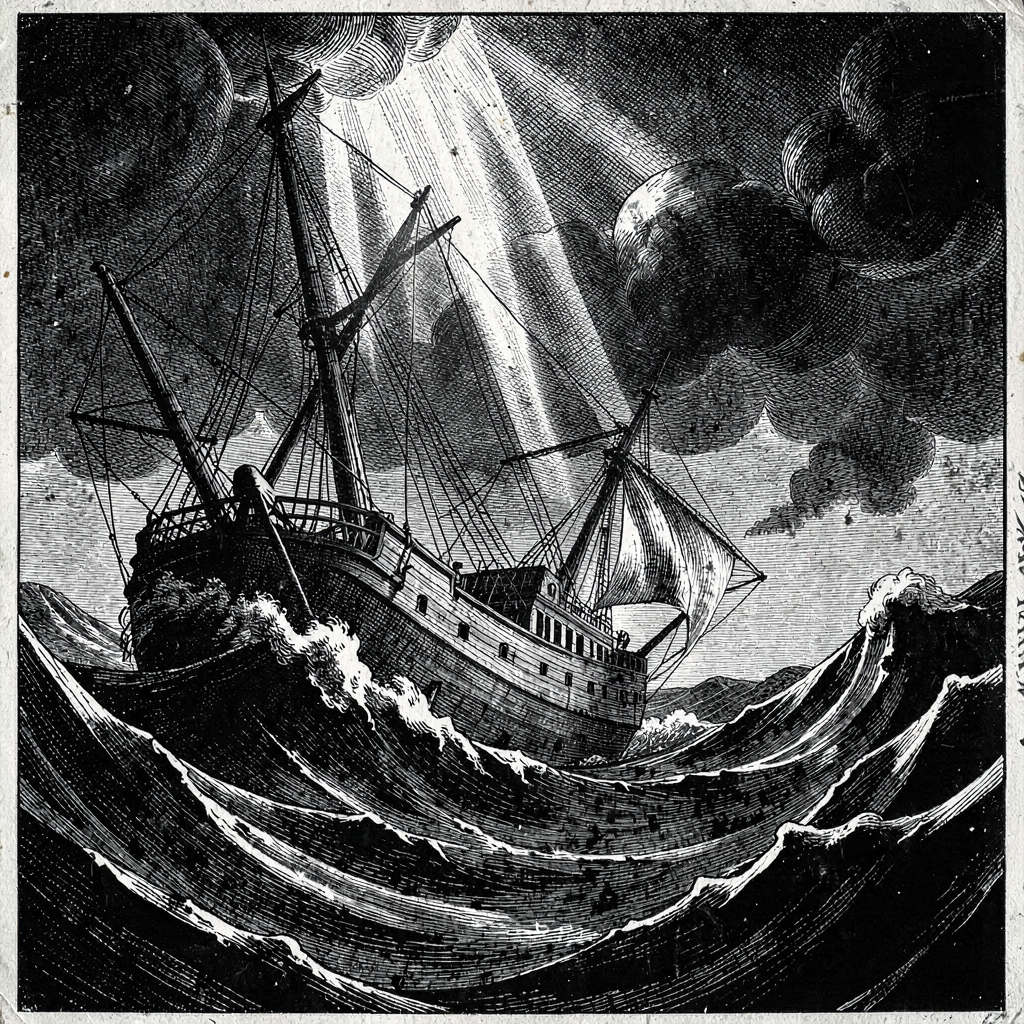
The Great Flood narrative serves as a profound locus of shared cultural memory across the Ancient Near East and later monotheistic traditions, yet each iteration refracts the event through distinct theological lenses. In the Epic of Gilgamesh, the gods decree the deluge capriciously, prompting Ea to warn Utnapishtim to build a vessel in Surippak (tablet XI). This motif of divine warning and preservation recurs in Genesis, where the Lord commands Noah to enter the ark to escape judgment for chamas, or violent corruption (Genesis 7:1). While the structural parallels are undeniable—righteousness, specific dimensions, and the preservation of life—the divergences reveal core theological commitments. In the Hebrew Bible and Christianity, the flood culminates in a covenant signified by the rainbow, marking a permanent shift in the divine-human relationship (Genesis 9:13). Conversely, the Qur'anic account of Nuh emphasizes the futility of preaching when his own son refuses to board, underscoring that lineage does not guarantee salvation (Surah 11:40). Similarly, the Hindu tradition of Manu, guided by the Matsya avatar of Vishnu, frames the event not as punitive judgment but as cyclical regeneration, with the fish towing the boat to a northern mountain. These variations transform a common mythic substrate into unique theological statements regarding divine justice, covenant, and cosmic order.
Noah and eight souls; the rainbow is the explicit sign of the Noahic covenant. Duration: 40 days of rain, 150 days of rising waters.
The Torah version gives the ark's exact cubits and frames the flood as judgement for chamas — violent corruption.
Nuh preaches for 950 years before the flood (Qur'an 29:14); his own son refuses to board and is drowned.
In the Shatapatha Brahmana and Matsya Purana, Manu is warned by a small fish (an avatar of Vishnu) that grows enormous; the fish tows his boat to a northern mountain.
In the Epic of Gilgamesh (tablet XI), Hasisadra / Utnapishtim is warned by Ea to build a great boat and save life from the deluge. George Smith's 1872 reading of the cuneiform flood tablet electrified Victorian Europe by showing the biblical narrative had Babylonian antecedents older than Genesis.
No one has written anything here yet. Some places to begin:
Sign in to join the discussion.