Christianity
Exodus
“And God said unto Moses, I AM THAT I AM: and he said, Thus shalt thou say unto the children of Israel, I AM hath sent me unto you.”
A Hebrew infant is hidden, raised in Pharaoh's household, flees to the desert, encounters God at a burning bush, and returns to lead his people out of Egypt through parted waters. The foundational liberation narrative of Judaism; honoured in Christianity and Islam.
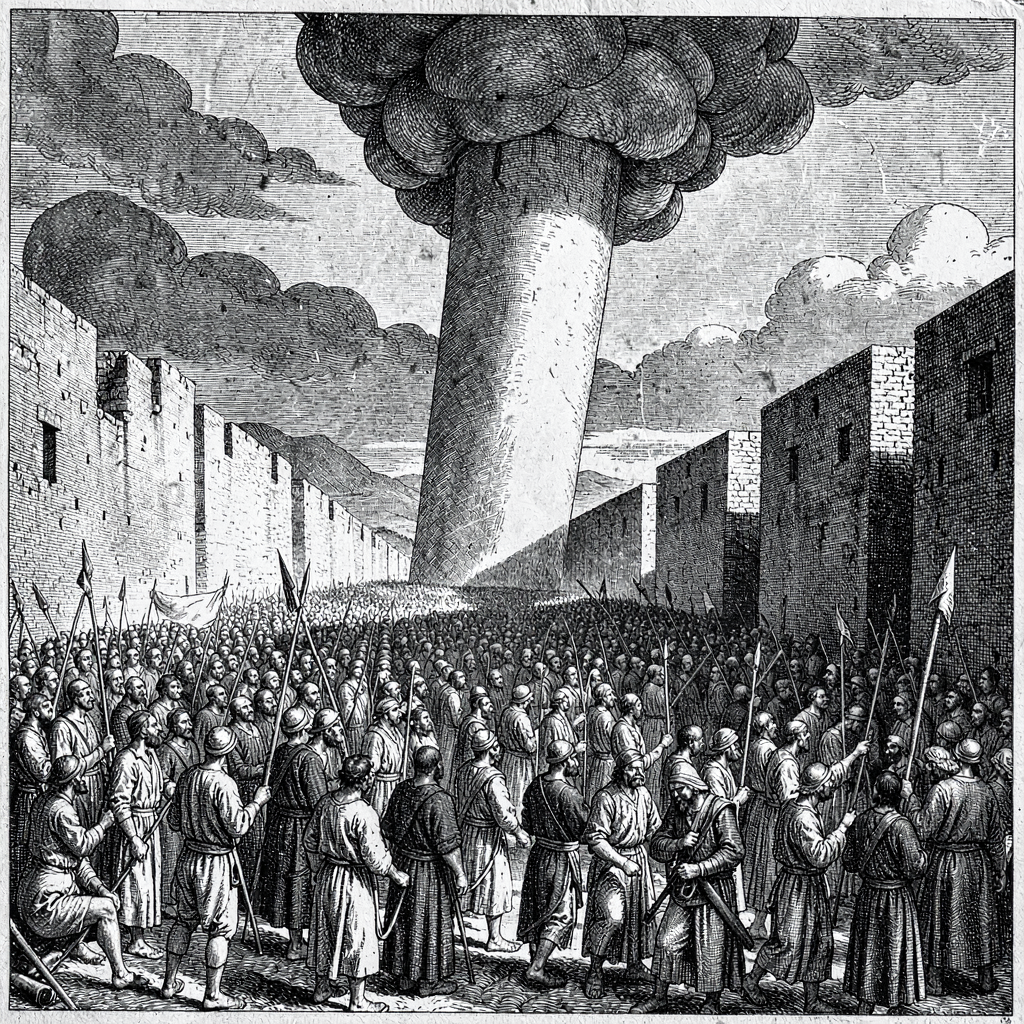
The narrative of Moses and the Exodus serves as a foundational liberation archetype across Judaism, Christianity, and Islam, binding these traditions through shared motifs of divine intervention and human deliverance. In all three, a decree threatens Hebrew infants, yet a child is preserved in a river basket, raised within the oppressor's house, and ultimately commissioned to confront Pharaoh. The climax involves the parting of waters and the destruction of the pursuing army, a motif vividly rendered in Exodus 14:21, where Moses stretches out his hand over the sea. However, the theological weight of these events diverges significantly. For Judaism, the event is historically anchored in the Passover festival and the subsequent revelation of the Law at Sinai, establishing a covenantal community. Christianity, while honoring the historical narrative, frequently reads it typologically; the Paschal lamb prefigures Christ's sacrifice, transforming the Exodus from a political liberation into a spiritual release from sin, a connection underscored during the Last Supper. Islam, conversely, emphasizes the prophetic continuity of Musa, who is the most frequently mentioned prophet in the Qur'an. His confrontation with Pharaoh is dispersed across multiple surahs, such as Surah Taha, highlighting the sign of the staff becoming a serpent and the definitive drowning of the tyrant. While the structural parallels are striking, the interpretive lenses—covenantal, typological, and prophetic—reveal distinct theological priorities within each faith tradition.
Central festival: Passover. Ten plagues enumerated; the tablets of the Law are given at Sinai.
Read typologically as liberation from sin; Passover becomes the backdrop of the Last Supper.
Musa is the most-mentioned prophet in the Qur'an (by name). His confrontation with Pharaoh is spread across many surahs; his staff turning to a serpent, and the drowning, are recounted in detail.
No one has written anything here yet. Some places to begin:
Sign in to join the discussion.