Christianity
Matthew
“And was transfigured before them: and his face did shine as the sun, and his raiment was white as the light.”
Across these traditions, divine self-disclosure is frequently mediated through elemental phenomena such as fire, cloud, or overwhelming light, signifying a boundary between the immanent and the transcendent. While the phenomenological markers of fire and light serve as common vehicles for revelation, the theological implications diverge regarding the nature of the divine presence: whether it is localized, incarnate, or strictly ineffable. Scholars note that in Abrahamic contexts, theophany often validates prophetic authority, whereas in Hindu contexts, it frequently reveals the cosmic form of the deity to the devotee.
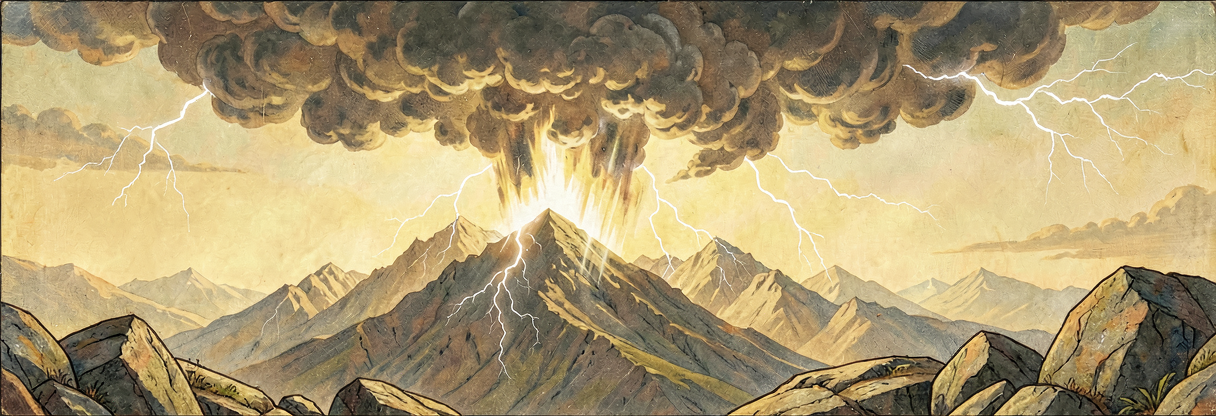
Across these traditions, divine self-disclosure is frequently mediated through elemental phenomena such as fire, cloud, or overwhelming light, signifying a boundary between the immanent and the transcendent. In the Hebrew Bible, Exodus 3:2 describes the angel of the LORD appearing in a flame of fire, establishing a protective veil that simultaneously reveals and conceals God's presence, emphasizing divine transcendence. Similarly, the Christian Transfiguration records Christ's face shining as the sun, bridging divine and human natures within a historical person. Islam's Light Verse offers a different nuance, stating Allah is the Light of the heavens and earth using a parable of a niche and lamp, avoiding anthropomorphic localization while emphasizing the transmission of the Word rather than visual form. Hinduism presents a distinct cosmological vision; in the Bhagavad Gita, Arjuna beholds a splendor resembling a thousand suns bursting forth, revealing the universal form of the deity encompassing all time and space. While phenomenological markers like fire and light serve as common vehicles for revelation, the theological implications diverge regarding the nature of the divine presence. Abrahamic contexts often validate prophetic authority through these manifestations, whereas Hindu contexts frequently reveal the cosmic form of the deity to the devotee. Ultimately, the medium obscures the full essence, preserving divine ineffability even amidst overwhelming luminosity.
The transfiguration presents theophany as the revelation of the incarnate Christ's glory, bridging the divine and human natures within a historical person. This contrasts with traditions where the divine remains strictly separate from the human vessel.
In the Exodus narratives, the fire and cloud function as protective veils that simultaneously reveal and conceal God's presence, emphasizing divine transcendence. The focus remains on the covenantal law rather than the ontological transformation of the observer.
The Light Verse describes God as the light of the heavens and earth using a parable of a niche and lamp, avoiding anthropomorphic localization. The revelation at Hira emphasizes the transmission of the Word rather than a visual manifestation of the divine form.
The Vishvarupa in the Gita reveals the universal form of the deity, encompassing all time and space, which is viewed as a direct vision of the cosmic reality. This differs from the prophetic theophanies by offering a mystical vision of the deity's totality rather than a specific command.
The Holy Spirit guides, empowers, and comforts believers in their daily walk. This presence marks the new covenant relationship with God.
Spiritual truth and righteousness are contrasted with ignorance and sin throughout scripture. Believers are called to walk in the light as children of God.
The 'beginning of wisdom' that every tradition distinguishes from terror — the awe of the small soul before the unbearable nearness of the Holy.
The high place where the air thins and the soul meets the Holy — Sinai, Olives, Hira, Meru, Tabor.
Kavod, doxa, dakhsha — the heavy weight of presence that crowns the Holy and the saint.
The window of the soul — every tradition watches the watcher, treating the eye as both organ of judgment and tutor of desire.
The veil of glory — every tradition makes the cloud the place where presence is hidden and revealed, where the voice speaks and the eye must drop.
No one has written anything here yet. Some places to begin:
Sign in to join the discussion.