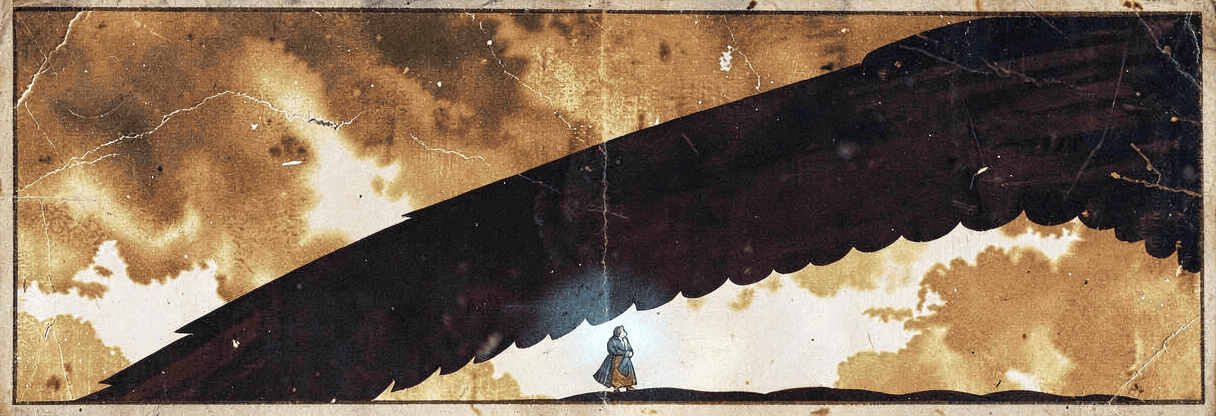
The Shadow
Cover of the wing, shade in the desert, the brevity of every life — every tradition reads the shadow as both refuge and reminder of the body's passing.
"He that dwelleth in the secret place of the most High shall abide under the shadow of the Almighty."
"Yea, though I walk through the valley of the shadow of death, I will fear no evil: for thou art with me;"
"My days are like a shadow that declineth; and I am withered like grass."
"...a strength to the needy in his distress, a refuge from the storm, a shadow from the heat..."
See this theme as a comparative study.
- The Secret Place
Across these traditions, the "secret place" functions as a locus of divine intimacy that transcends public ritual performance. While the Hebrew Bible emphasizes this space as a sanctuary of protection, the New Testament reframes it as a site of relational reciprocity with God. Islamic texts similarly valorize concealment, though primarily to safeguard the sincerity of devotion from the corruption of ostentation. Scholars note that while the mechanics of privacy differ, the underlying theological assertion remains that the divine gaze penetrates hidden spaces.
- The Refuge and Strong Tower
Across Abrahamic traditions, the divine is frequently invoked as a sanctuary against existential peril, though the locus of safety shifts from a communal fortress to an internalized spiritual state. While Hebrew and Christian texts emphasize Yahweh as a physical stronghold and gathering point for the faithful, the Islamic tradition focuses on the ritual invocation of refuge (isti'adha) against specific spiritual and temporal harms. A significant divergence arises in the Buddhist perspective, which critically deconstructs the concept of external refuge, positing that true safety is found only in the realization of the Dhamma rather than in any deity.
Discussion
No one has written anything here yet. Some places to begin:
- Which verse landed hardest for you?
- What's a counter-text — a verse that complicates this theme?
- How does this theme show up in a tradition not represented here?
Sign in to join the discussion.