Judaism
Genesis
“In the beginning God created the heaven and the earth.”
How the cosmos came to be. Compare the Genesis six-day account, the Qur'anic sign-motif, the Rigveda's famous hymn of cosmic uncertainty, and the Tao Te Ching's nameless origin.
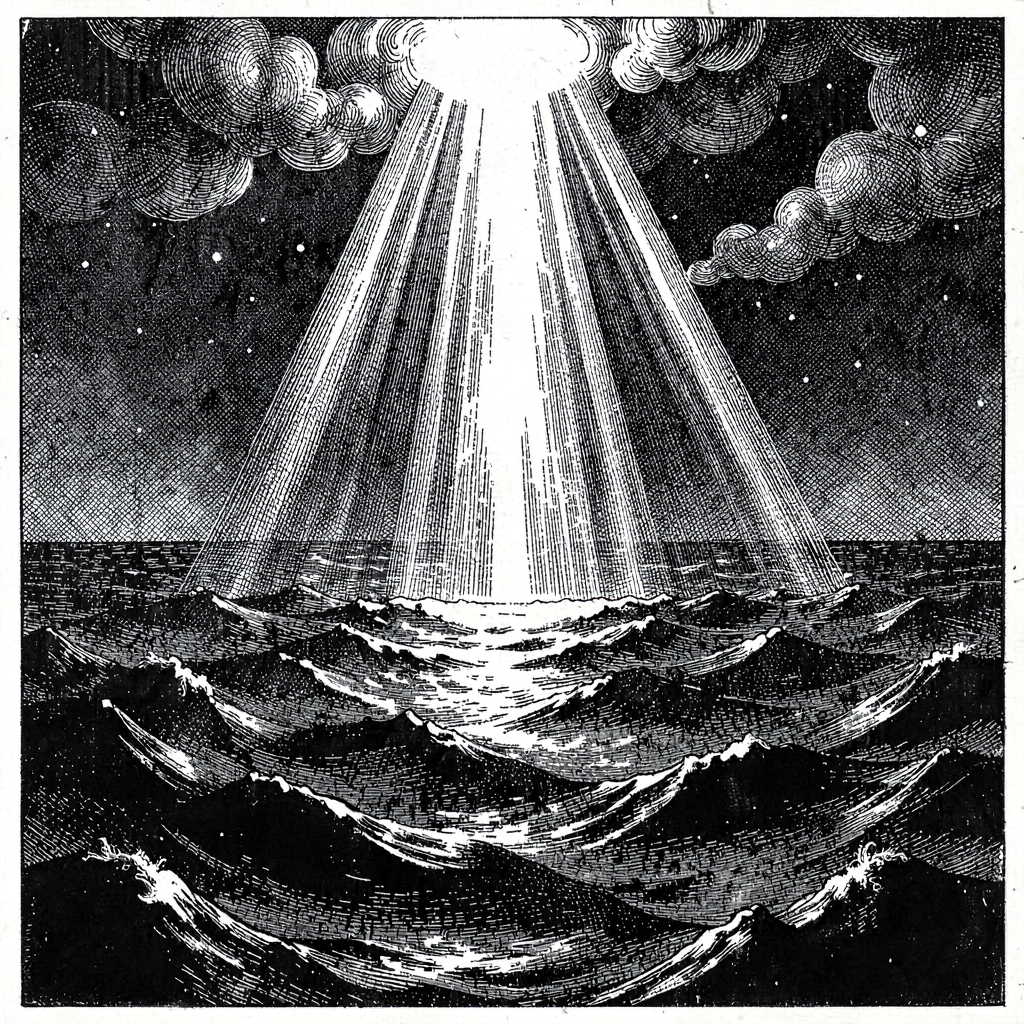
Across traditions, cosmogony begins with a primordial void or nameless source from which order emerges. Genesis 1 describes a structured six-day formation where humanity bears the divine image, culminating in Sabbath rest. Christianity extends this via John 1:1, identifying the Logos as the agent of all creation. Islam similarly posits six periods (yawm) but emphasizes Allah's transcendence; creation serves as signs (ayat) for reflection rather than a narrative of divine fatigue. In stark contrast, the Rigveda's Nasadiya Sukta (10.129) embraces epistemic humility, questioning if even the gods know the origin. Taoism offers a non-theistic progression: the Tao generates One, One generates Two, and Two generates Three, from which all things arise. Zoroastrianism introduces a moral dualism at the cosmic dawn, where two spirits—the better and the worse—define existence. Hindu thought further internalizes this, with the Aitareya Upanishad asserting that the Self alone existed initially. While Abrahamic faiths stress a personal Creator and human stewardship, Eastern traditions often depict an impersonal principle or an ontological mystery. These divergences reveal whether the cosmos is fundamentally moral, mechanical, or ultimately unknowable, shaping each tradition's soteriological path.
Six days of structured creation; humanity made in the divine image; the seventh day is hallowed.
Inherits Genesis; John 1 extends creation through the Word (Logos).
Six 'days' (yawm, long periods), but no Sabbath rest — Allah does not tire. Creation as signs (ayat).
The Nasadiya Sukta (Rigveda 10.129) radically questions whether even the gods know the origin.
The Tao produces One, One produces Two, Two produces Three, Three produces all things (Tao Te Ching 42).
Yasna 30 frames creation as the choice between two primal spirits — the better (Spenta Mainyu) and the worse (Angra Mainyu). The cosmos is moral from the moment of its making.
The Upanishads push behind the gods to the Self (Atman) — Aitareya 1: 'In the beginning this was Self alone, in the form of a person.' Brahman as the one without a second.
No one has written anything here yet. Some places to begin:
Sign in to join the discussion.